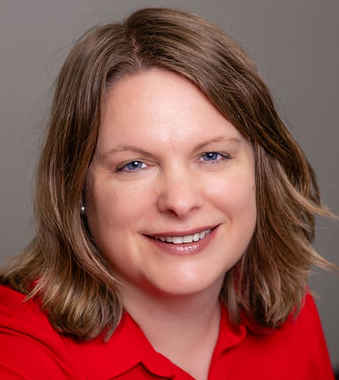
226. Found ICBT after ERP Wasn’t Effective: A Personal Story with Dr. O. Alan Noble
Carrie sits down with author and professor Dr. O. Alan Noble to share his deeply personal journey through years of OCD treatment, intense suffering, and ultimately finding hope through ICBT.
Episode Highlights:
- Why traditional talk therapy and reassurance can unintentionally keep OCD cycles going
- How ERP may help some people while still leaving others feeling stuck and exhausted
- The key differences between ERP and ICBT in treating OCD
- How ICBT helps people recognize the difference between reasonable doubts and obsessive doubts
- How faith, community, and hope can sustain people during seasons of deep despair
- What real recovery from OCD can look like, even when intrusive thoughts still occur
Episode Summary:
What Happens When ERP for OCD Stops Working?
I never expected to sit across from someone who had done everything right and still felt stuck. Dr. O. Alan Noble is a professor, author of four books, and a contributor to outlets like The Atlantic and Christianity Today. But behind all of that, he spent years battling severe OCD, doing ERP faithfully, and still watching the relief disappear every time. If you have ever wondered whether ERP is truly enough for everyone with OCD, his story will change how you think about treatment.
Can You Spend Six Years in OCD Therapy and Still Not Get Better?
This is something I hear more than I wish I did. A caring therapist. Reassurance given session after session. A client who left feeling okay until the doubts rushed back in before he even got home. Six years of that same cycle. There is something in this pattern that every person with OCD and everyone who loves someone with OCD needs to hear.
What Is ICBT and Why Did It Work When ERP Did Not?
When his ERP therapist finally admitted “this isn’t working,” it cracked open a door. Inference-Based CBT introduced ideas that ERP had never touched, including that not all doubts are created equal and that the content of OCD thoughts actually matters. What Dr. Noble discovered on the other side of that door is something you need to hear him describe himself.
What Does ICBT for OCD Actually Look Like in Real Life?
Dr. Noble still gets intrusive thoughts today. What changed is what happens next. Using tools from ICBT like the bridging exercise, he described working through an intrusive thought that very morning in about three minutes before moving on with his day. Three minutes versus hours of rumination. That shift is what his wife calls miraculous, and after hearing his full story I completely understand why.
How Do You Stay Hopeful During OCD Recovery When Nothing Seems to Work?
There were days Dr. Noble sat on the edge of a bed in tears, convinced nothing would ever change. What kept him going was not a clinical strategy. It was something much deeper. The people, the scriptures, and the perspective that carried him through his darkest moments are all part of this conversation, and honestly this section moved me the most.
Can Christian Faith and OCD Treatment Actually Work Together?
Dr. Noble’s journey started with a biblical counselor who offered scriptures to meditate on. For most people that feels like a lifeline. In his case it became more fuel for rumination. This tension between Christian faith and OCD treatment is one of the most misunderstood areas in mental health, and Dr. Noble speaks into it with honesty that only comes from living through it.
If you have been searching for hope around OCD recovery, wondering whether faith and evidence-based treatment can coexist, or just looking for proof that things can get better, this episode is for you.
Connect with Dr. O. Alan Noble here:
To Live Well: Practical Wisdom for Moving Through Chaotic Times
Transcript
Welcome, OCD warriors, to the Christian Faith and OCD podcast, where we are all about reducing shame and stigma of struggling with OCD as a Christian, sharing hopeful stories, and replacing uncertainty with faith as you develop practical tools for greater peace.
I’m Carrie Bock, Christ follower, wife, mom, and licensed professional counselor in Tennessee. I pray you are blessed by today’s episode. If you have been around the podcast a little while, last summer we did a personal story series, which was really great. And always whenever we have personal stories of Christians who have struggled with OCD, we always get really good feedback.
It helps reduce a lot of stigma, and people feel encouraged to keep going and feel like there’s hope for them when they hear someone else’s story. So I’m excited to bring that back to you this summer. And today on the podcast we have Dr. O. Alan Noble. He’s the associate professor of English at Oklahoma Baptist University, a fellow at the Keller Center for Cultural Apologetics, and author of four books, including his latest, To Live Well: Practical Wisdom for Moving Through Chaotic Times, On Getting Out of Bed: The Burden and Gift of Living- That was a really challenging book for me.
I’ll just throw that out there. Definitely prompted a lot of thoughts and took me back to definitely some times where I felt depressed and didn’t wanna get out of bed. That was rough. You Are Not Your Own: Belonging to God in an Inhuman World, is that also the name of your Substack?
Dr. Alan: Yeah, You Are Not Your Own Substack is the name of it.
Carrie: If you have not read Dr. Noble’s Substack, we’ll put a link in the show notes. You need to get over there and read the posts. They’re good. He’s had also a variety of articles published in different places, The Atlantic, Gospel Coalition, First Things, and Christianity. And you’re also married with three children.
Dr. Alan: That’s correct.
Carrie: We decided kind of talking ahead of time to really focus your interview on your treatment and kind of your shift from talk therapy and ERP, eventually over to iCBT, and that was how I got connected with you, actually, was one of our podcast listeners has a Substack, and she had, I think, linked one of your articles or talked about your book on getting out of bed.
That was how I found out about you, which is a really great connection. So if anybody has any guest suggestions out there, please always share them with us. We enjoy hearing those as well. Tell us a little bit about your journey of what it was like for you trying to find the right treatment for OCD.
Dr. Alan: I started with biblical counselor. That was my first move, was with a biblical counselor, and that was not helpful. This person really tried. He was a very sweet man. He really had a heart for God, and he was very kind and gave me a lot of scriptures to think about. But the scriptures just gave me more to ruminate about, trying to make a decision about what I was ruminating about and trying to figure things out, right?
That’s one of my ruminations, one of my fixations, is trying to figure things out. Those scriptures just gave me more fodder to figure things out. He did tell me one thing, the last thing we said to each other that was helpful and was true, which was that I needed to understand God’s grace for me better and the meaning of the cross.
And I’ve found through my therapy that that piece of truth was true. Even though he couldn’t help me with ERP or iCBT, he did understand that I do struggle with understanding God’s grace. So I went from that. I came from a church background where seeing therapists was not what was done. That’s why that was my first step, and then I went off to grad school, and my next step was after talking to a pastor, I decided I’m gonna take this big leap and I’m gonna see an actual therapist, a quote unquote secular therapist who is actually a Christian, but they studied in secular school, so it didn’t count.
And a secular psychiatrist, and this was a big step, and I prayed about it and I talked to a pastor, and he’s like, “Yes, you should do this.” And so I felt like, okay, I’ve got this blessing. I’m gonna do this. And the psychiatrist was helpful with the medication side, but the therapist, we did some light ERP and didn’t really help too much.
I moved to Oklahoma, was in a small town, and the only therapist I could get was somebody who did talk therapy. And at the time, because I’d only done some light ERP when I was in Texas, I really didn’t know that ERP was the quote unquote gold standard. I didn’t know what I was missing out on, and I just thought therapy was therapy.
And the therapist I got in Oklahoma said, “Yes, I treat OCD. I’ve treated OCD before.” So these were the magic words I was looking for, right? I didn’t know any better. I was expecting– That’s what I was looking for, somebody who says, “I’ve treated this before.” And I went to her for about six years, and she gave me reassurance for about six years.
I would come to her with various fears I had. My doubts have to do with fears about having harmed people and being negligent, and she would be like, “No, you haven’t been negligent. You’re okay.” And I would walk away feeling fine until I started my car and then The doubts would come back, ’cause that’s how OCD works, and I would say, “What if she doesn’t know?
What if she doesn’t understand? What if? What if? What if?” So I kept going back to her because it was almost addictive really. Wow.
Carrie: Did she ever, like, say, “Hey, you’re coming back with some of the same things, and we’ve already talked through this”? Did it create any kind of red flags for her, like my- No … the client isn’t getting better?
That’s really concerning, kinda scary. Uh, however, I will say that your pathway is very familiar to me, that I’ve heard this from a lot of- Yeah … different people that I’ve talked through the podcast or who have sought help from me. It’s like, “Well, I went to this person that was a Christian, and they really understood my faith, but then they didn’t understand the OCD piece or didn’t know- Yeah
how to help me.” Unfortunately, there are therapists out there saying, “Oh, yeah, like, I work with OCD no problem,” but then you get in there, and they’re not providing evidence-based care, which is problematic.
Dr. Alan: Yeah, and again, very kind person, very caring, concerned about me, but was not equipped with the tools to address what needed to be addressed with me.
And then I got connected with somebody who actually treated OCD with ERP. I started actually listening to some podcasts, I think, and that’s what sorta tipped me off. And I saw this person who treated OCD in Oklahoma City, which is 45 minutes away from where I lived at the time, so it was a sacrifice. But I said– I reached out to him and asked, “Maybe you can help me.”
And I explained my symptoms, and he said, “Yeah, you have OCD, and there’s this thing called ERP, and that’s what you need.” I was like, “Okay, let’s try this.” And so I tried that with him, and then I tried it with another therapist, and I tried some intensive ERP. I tried it for at least two years of just intense ERP.
And you introduced me as Dr. Noble, and I do have a PhD. I’m a good student. I would imagine. I’m good at doing my homework. I have four books. I’m good at doing my homework. So when you give me an assignment, I’m doing my homework. And so I did my ERP homework. And I really wanted to beat this because it was severe on the scale.
It was not light OCD. It was taking up long hours of my life and really disrupting my family life. I was serious about beating this because I needed to get my life back. And so here I was practicing the ERP for two years, just doing the exposure scripts. I was listening to exposure scripts. I was doing different exposures that I was assigned, doing everything that I needed.
I would see some relief. I would see some improvement, but then it would just come back again.
Carrie: So it was, like, a little bit of relief, but it seemed to be temporary or short-lived. That
Dr. Alan: was exactly- Yeah … the problem. If my OCD was at an eight out of ten, it would come down to, like, five. And stay there for a little while after practicing ERP just vigorously, and then it would just go back up to an eight again.
It wouldn’t come down. I was applying the tools. I was doing what I was supposed to. Really, applying the tools was my life. Wow, yeah. This was what I was doing.
Carrie: So then it was like recovery was taking all of your time, it seemed like. Did you almost feel– I think sometimes people can get obsessed about their recovery.
Did you feel that way? Like, “I’ve gotta do this, and I’ve gotta do it exactly as prescribed,” and all the things. I
Dr. Alan: didn’t feel obsessive about it, but I did feel obsessed about it. So it wasn’t like a compulsion, but I was obsessed about it in a non-compulsive way. I was like, “This is what I have to do. I’ve gotta beat this.”
It was in the back of my head almost all day. I was either doing a compulsion by ruminating in my mind, ’cause that was my main compulsion, was rumination, or I was practicing ERP or thinking about practicing ERP all day. So it was like my life was OCD. That was it. And it was just so draining, and also so boring.
It’s like, I don’t want OCD to be my life. My life is so much bigger and richer than this. I thought it was, and now it was just this.
Carrie: When you were going through that level of intense suffering with the OCD, how did you remain hopeful to keep going? Yeah. Because I think a lot of people just say, “ERP is the gold standard.
It didn’t work for me. I’m just giving up. I’m tapping out right here.” And there are some people that just say, “Well, I’m just OCD. You gotta live with me. Like, this is all there is to it.” Like, how did you keep pushing or keep going?
Dr. Alan: That’s an excellent question because there were times when despair was tapping at my door when I thought that exact question.
I thought, “Okay, this is the gold standard. This is what I’ve been told. I’ve heard all the podcasts I’ve done. I’ve read all the books. They’ve said this is it. This is how you get better, and I’m practicing this religiously, and I’m not getting better. I’m not seeing these results.” Maybe this is as good as it gets.
Maybe I’m not gonna see any more improvement over this, and I just have to come to peace with this. And a couple of things gave me hope. One is in Romans 8:28, Paul tells us that God works together all things for our good. So just believing that God is somehow working my good through this suffering, and I didn’t know how.
I didn’t know the particulars of what that good looked like. I didn’t know how he was redeeming that good, but I knew that he was working my good through that suffering and just resting in that. Also having a group of friends and family who are cheering me on and telling me, “Don’t give up. Keep going Keep fighting, keep pressing on, keep striving for wellness.
Because God desires our good, because we are given stewardship over our body, which includes our mind- Yeah … it is honoring to God for us to desire recovery. We’re not gonna get perfect bodies and minds until the resurrection, but it’s good for us in this life to fight for, to strive for, to work towards healing.
So I was committed to that, and I would look at my kids, I would look at my wife, and I would say, “I have a duty to do this. I don’t get to roll over and give up.” The other thing is that even though these therapists, these ERP therapists, they were great therapists. They were just wonderful therapists. They weren’t seeing the results that they wanted to see in me, but they were great therapists who were using all the tools that they had, and they didn’t give up on me.
They said, “What is it gonna take to see you get better?” It was the last therapist I was working with who actually introduced me to iCBT- Okay … who said, “Allen, this isn’t working” What we’re doing isn’t giving you the relief and the progress that we need to see, that we want you to see. Why don’t we try something different?
And if I can’t provide that for you, maybe somebody else can, because I don’t want you to give up. I know that you can improve. And hearing that meant a lot because, like I said, I wanted to give up. I did wanna roll over. Maybe I’m still gonna have some intrusive thoughts, but it doesn’t have to take up hours and hours and hours and hours of my day.
That’s what I needed to hear.
Carrie: Therapeutically, I’ll just say from the therapist side, that’s a really hard conversation to look at somebody and say, “I believe in you and I believe in your health, and I am in the way of that now.” Like, “I have-” Yeah “… literally given you every tool I have in the box, and I want you to succeed, and that means that you have to kind of fly on away from me.”
Because sometimes people can take that personally of like, “Oh, you’re giving up on me?” It’s like, “No, that’s not what I’m saying. I’m saying you need a different toolbox than what I have-” Yeah “… right now. And for your best interest, it’s not good for us to keep on clients for long periods of time that are not making progress.”
That’s not ethical.
Dr. Alan: Yeah. It was a hard transition, and starting iCBT was hard too, but it was what I needed, and that’s what made the difference for me. I still clung onto that hope. I needed that hope, that belief. What I’ve come to realize myself is that desire for recovery, in my opinion, is the most important key to recovery.
It was at least the most important key to my own recovery because all throughout this journey that I just described, the ups and downs, if I gave up desiring to recover at any point, it would’ve stopped. I had to have this drive to recover. I had to have this belief that it’s my responsibility before God and before my family and before my friends, before my church, and before myself.
Like, I owed it to all those individuals and myself to get well, as well as I could get. I had to have a hunger for that. I had to advocate for myself. I had to keep looking for therapists, the right therapist, the right medication, and that took a drive.
Carrie: Yeah. I think the beautiful thing about living in Christian community is there are days where we don’t have it for ourselves, but somebody else can have it for us.
Yeah. And in your book, on getting out of bed, you talked about this guy that you just kept calling him- Yeah … all the time and felt bad, “Sorry, I’m calling you all the time to help me through these dark places,” and he’s like, “That’s what I’m here for.” And we need that inside ourselves, that drive to get better, but we also need other people to hold us up on the days that we just don’t have it.
Dr. Alan: Yes, absolutely. There were definitely many, many days where my desire was not there, and it was other people carrying me. Three or four friends, plus my wife and my children in their own way, and who I would contact when I was in despair or tempted to despair, and they would give me the hope, comfort me with the comfort of Christ when I didn’t have that comfort, as Paul talks about Corinthians, I believe.
Just give me that comfort when I felt like I didn’t have it, and they would share that with me, not to reassure me, but just give me that comfort so that I could move forward.
Carrie: Was there a particular concept in ICBT that stood out for you or that you found particularly helpful?
Dr. Alan: Just the basic premise that there are reasonable doubts and obsessive doubts.
Just that basic premise itself is really powerful for me, I think. So there are a couple things. That one’s really powerful for me, that I can look at my doubts and say Based on my senses, is this a reasonable doubt? Do I have sense information based on, including my common sense, to evaluate this as a reasonable doubt?
Is this relevant to the here and now? And that kind of rocked my world and flipped it upside down and made it seem like, well, okay, this makes a lot more sense, as opposed to just seeing things in terms of, well, just not even thinking in those terms at all. That really helped me, I think especially because I’m somebody who thinks a lot, and so just having that ability to use my mind without getting stuck in the weeds of the content- Yes
was really powerful. Another really important concept is the feared possible self. Just that idea that this is coming from somewhere, that these thoughts aren’t random. That’s another thing that ERP always felt like it was lacking that didn’t make sense to me from ERP, is that the content is totally irrelevant.
Well, is the content totally irrelevant? Because it seems like it has a pattern. It seems like it all stems from somewhere. So like for me, like it all centers around being a negligent self. Well, that tells me something, and that probably points to something, and that probably matters. So why aren’t we talking about that?
That seems worth poking at, and why aren’t we poking at that? And so ICBT does a good job of addressing that, of bringing that elephant into the room. I really appreciated that.
Carrie: Yeah. And I like that spiritually in the context of the- Yeah … real self. If we’re saying the content doesn’t matter at all, then the content is connected to things that you value.
So it’s like, well, so you’re saying my values aren’t important- Right … versus recognizing like, okay, this is a lie, a false self, and then this is who I really am. What are your thoughts about this spiritually, just in terms of like sense data evidence? ‘Cause we have a lot of people that wrestle with things like sin.
Yeah. Did I sin versus not?
Dr. Alan: That’s a great question. I think we can trust our senses. I think that God has given us senses to use as reasonable tools as best we can to make sense out of the world, and I think that our senses can be fallible. I think there are two things to think about. One is that it’s reasonable for us to trust our senses unless we get evidence otherwise, and that’s what ICBT teaches, right?
If you get data that says that the video you watched was AI, then you change your information, right? Mm-hmm. But otherwise, you trust your senses. But for the person with OCD, the analogy I always like to use is they come up to the street corner and instead of crossing the street, looking once, checking for cars, I know for me, I wanna check like a million times before they cross the street, over and over and over again, instead of trusting their senses, right?
Right. Normal person trusts their senses. They look once, they trust their senses, and then they cross the street if there’s no cars coming. It’s reasonable. God has given us good senses. It’s reasonable for us to trust our senses. And the other thing we can do is, and James talks about God giving us wisdom, and I think that we can pray for wisdom and clarity and trust that God gives us those things, and trust that our senses are good, and let it go at that, and not doubt our senses.
I don’t mean that compulsively. I’m not saying compulsively pray for wisdom, but just in general, pray that God gives you wisdom and trust that He does that, and then move forward in confidence, resolute.
Carrie: How have you wrestled at all, like, with the concept of healing and desire for healing and recognizing, like, okay, God allowed this intense suffering as a part of my story?
Dr. Alan: Yeah, that’s hard. There have been a couple of things that I’ve thought about. What’s hard about this, it’s not just my suffering, but it’s affected other people, right? Sure. That’s the reality, is it’s affected my family, it’s affected my friends. It has ripple effects. Even if you’re living alone, it’s gonna affect your coworkers, your neighbors.
Suffering always ripples. That’s what makes it so difficult, is that you can’t say, “Well, my suffering taught me this lesson, and so it’s been redeemed.” You also have to acknowledge that other people were hurt by it. But I’ll say a few things. I’ll say, one, Paul teaches as a truth, in Romans chapter five, I believe, “Through suffering, I’ve been taught perseverance, I’ve been taught endurance.”
And he says, “Endurance builds character, and character builds hope.” And that’s been true for me. When I look back at what I have been through, this just hit me a couple of days ago. I was just walking along or driving or something was happening, and I just thought, “Allen, do you remember how much despair you were in?”
Just sitting on the edge of a bed crying, just hopeless, just the OCD, just absolute control, feeling like you were the worst monster in the world. You made it through that. Isn’t that amazing what God has taken you through? I didn’t mention this, but thanks to iCBT, through the last year and a half or so, my wife calls it miraculous, the change that has happened because of iCBT compared to ERP.
“It’s just been miraculous,” she says, and I agree with her, and I thank God for it. Yeah. But just seeing that change, part of what I’m looking back at is I’m looking back the change that’s happened in me, the hope that I have, knowing that God can do miraculous things, that He can take me through hard times and bring me through them, and I’m not the same person Another thing that’s happened is that I have been able to help a lot of other people through my own suffering, and Paul again talks about this when he talks about comforting others with the comfort of Christ.
It doesn’t mean that my suffering isn’t serious. It doesn’t mean that my suffering didn’t happen. It doesn’t mean that other people didn’t suffer because of me. But it does mean that that suffering has meaning, that it does something. I have been able to walk with other people who have OCD and tell them that they have hope, that they can get help, that they can do something, that they have agency in their lives, that they can advocate for themselves and get the proper therapy, whether it’s ERP or iCBT, whatever it is, get the proper help.
I can pray for them. I can encourage them. I can teach them not to get reassurance. I can do these things because I have been there, and I can love them. The gratitude I’ve received from that is just so powerful. And then finally, again, I just go back to Romans 8:28. Somehow, God is working my good through this suffering, and He’s working the good of my family through their suffering that they experienced through my suffering and my friends and anyone else who was affected by this.
I don’t know how God is weaving that But I know that God is good. I know that He loves us. I know that He’s just, and I know that He’s caring for us, and I know that He’s almighty, and I know that He’s a good God, and I know that He’s gonna work these things out. I have hope that somehow He’s working these things for the good.
And somebody could look at that and say, “Well, it’s just wishful thinking,” but I would say, “No, I’ve seen Him work miracles.” Yeah. I, I have hope.
Carrie: I think that one of the biggest lies that people believe when they’re in the midst of suffering is it’s always gonna be this way.
Dr. Alan: Yeah. It’s
Carrie: always gonna be this bad.
I’m never gonna be able to get out of this. And that’s the lie, and we know that God can use anything and to change and transform people. And I’m glad that you got over that hurdle of getting into, quote, “secular therapy from a Christian person.” Yeah. And you went on that journey and eventually found the right help.
And the idea behind having podcasts like this and people finding your writings is to get people in good treatment faster so that they don’t have to- Yeah … go through that long journey where everything is just- Getting more and more difficult, and think that this is very hopeful for our audience. Yeah. I think sometimes people think the goal is, like, to never have another intrusive thought again.
Mm. And so we just wanna debunk that as well. Yeah. When you think about recovery- Mm … what does it look like for you today?
Dr. Alan: Yes. I mean, even for today, I still have intrusive thoughts. I still have things that come up, and I use my tools, and I apply them. So today, intrusive thought hit me, and I used the bridging tool that it, ICBT teaches, and visualized myself on a bridge, and made a choice not to go into the bubble, and moved on with my day.
For today, it took me about three minutes to make that choice. Now, later on today, I might not make that choice. I might slip up and make the choice to go in the bubble, and that might happen. But overall, my recovery looks like making that choice less and less and making the choice to move towards my family and what I believe is the life that God has given me, has called me to over and over again.
As I said, overall, this change has been miraculous. There have been bad days. There have been bad weeks. Sure. There have been bad months. That is a reality, and a reality that I work on with my therapist still. But the overall trajectory has been so much better that it is still amazing. Thank you for bringing that up.
Yeah, that’s a really important point. It’s not that I don’t get intrusive thoughts. It’s that they don’t run my mind anymore. I have tools that I can use to choose what I’m going to do next, and most of the time now, I can choose to move toward my life.
Carrie: Awesome. I know a lot of people have told me that they found the bridge exercise very empowering.
It’s like, “Oh, I feel like, hey, there’s a pause here.” If I can find that pause, right? And you don’t always find it, but the more that you become aware of how you get there, the more you find it, and then I feel really empowered to know, “Hey, I found the pause. I have a choice right now.” Yep. Yep. I can either go right or I can go left, and I know what the consequences are gonna be depending on what I choose.
Awesome. Tell us a little bit before we go about your latest book that just came out.
Dr. Alan: Yes. It is called To Live Well, and it is a book about the seven virtues, prudence, justice, temperance, fortitude, faith, hope, and love. It’s about how to live well in a chaotic time. I think we live in very chaotic times. I don’t think that’s too debatable.
It feels very confusing to live in the modern world. It feels like everybody’s values are up in the air. It feels like the definition of love and of justice and of what is true is constantly being contested, and that makes it hard to move, hard to act, and very easy to get stuck. And so this is a book about how to move, how to live well, how to act in the modern world, the contemporary world.
And so I move through these classic virtues Grounding them in the Gospels, because it’s a biblical book, and grounding them in Jesus and His actions in the Gospels, and work through what it looks like to be a virtuous person for God. Not to earn God’s favor, because we already have that, but because God loves us, we wanna act virtuously and understand what it looks like to live virtuously in, uh, chaotic times.
Carrie: Yeah. It’s a crazy world out there. There’s a lot that gets thrown at us, and things are changing all the time, so any help for how we can live out Jesus in this environment I think is helpful, for sure. Yeah. Thanks. Thank you for sharing today. I’m really thankful for Dr. Noble for sharing his story, because I think there are many other people out there with this story that feel like they’re doing all the right things that they’re supposed to be doing and just aren’t getting better.
It’s important for people to know that there is hope out there, and to not give up, to keep going. I think for a long time in my own life, I was like, “Yeah, God has a plan for all this craziness,” but I really doubted whether or not it was a good one. And looking back, I can now see, like, God’s goodness in the course of my life, and I’m so thankful for that.
If you’re in the midst of just a really dark place with your OCD, I want to remind you that God hasn’t given up on you, and just encourage you not to give up on Him, to keep leaning in even when things are hard and they don’t make sense. I am currently working my way through to live well, and it’s been a slow go for me because I keep having to stop and think about things.
Definitely challenging in a good way, for sure. I hope that you guys will come back next week and join us as I interview a pastor about his OCD journey.
Until next time, may you be comforted by God’s great love for you. Christian Faith and OCD is a production of By the Well Counseling. Opinions given by our guests are their own and do not necessarily reflect the views of myself or By the Well Counseling.
This podcast is for informational purposes only, and should not be a substitute for seeking mental health treatment in your area.
Author
Christian OCD Testimony, ICBT, ICBT Journey, Inference-Based Cognitive Behavioral Therapy (ICBT)