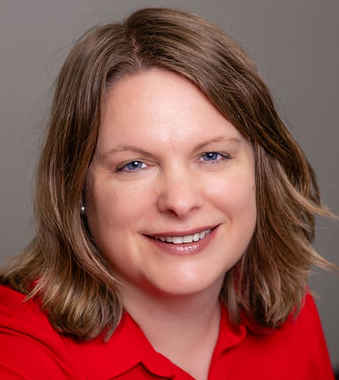
210. Understanding Grace and Accepting God’s Forgiveness with author Nathan Clarkson
In this episode, Carrie sits down with Nathan Clarkson, an actor, author, and podcast host, to talk about how scrupulosity, guilt, and contamination fears shaped his faith and how grace slowly rewrote that story.
Episode Highlights:
- Nathan’s early experience with OCD and how it shaped his faith
- How contamination OCD and scrupulosity often intertwine
- Why OCD creates a distorted, harsh view of God
- The difference between OCD guilt and true conviction
- What it means to accept God’s forgiveness—even when it doesn’t feel true
- How healing can grow in small, almost unnoticed steps when you walk with God and safe people
- Nathan’s book I’m the Worst
Connect with Nathan Clarkson: www.instagram.com/nathanjclarkson/
Transcript
Welcome back, OCD Warriors. Today on the show I’m talking with Nathan Clarkson. He is a film and TV actor, besting author, indie filmmaker, and podcast philosopher on his award-winning show, The Overthinkers. Nathan is here to talk about his book that just came out towards the end of January called I’m the Worst. A powerful testimony that he shares with us regarding his lived experience with OCD. If you struggle with Scrupulosity at all, you’re really gonna enjoy this episode because we get into some juicy topics regarding grace, sin, God’s forgiveness. I know that you’re gonna be blessed by this episode.
Hello and welcome to Christian Faith and OCD with Carrie Bach. I’m a Christ follower, wife and mother, licensed professional counselor who helps Christians struggling with OCD get to a deeper level of healing. When I couldn’t find resources for my clients with OCD, God called me to bring this podcast to you. With practical tools for developing greater peace, we’re here to bust through the shame and stigma surrounding struggling with OCD as a Christian, sharing hopeful stories of healing and helping you replace uncertainty with faith. I’m here to help you let go of the past and future to walk in the present abundant life God has for you. So let’s dive right into today’s episode.
Nathan, welcome to the show. We’re glad to have you here.
Nathan: Well, thank you so much for having me. I’m glad to be here.
Carrie: I understand you’re gonna tell us a little bit about your OCD story. You talk in your book about like just days spent with a lot of compulsions, showering, cleaning rituals, and like what was the process of coming to an understanding of your OCD?
Nathan: Oh yeah. Well, this has been a story since I was very young. My mom, before I even can really even remember, she has a story about me being a very, very little boy, maybe two or three. And she’s putting shoes on me, and she’s tying the little shoes and the laces are uneven, and I start crying and she can’t figure out what’s wrong, and she’s trying to comfort me. My little 2-year-old boy struggling for words, and I’m crying and then fidgeting, and she’s trying everything, and I keep on pointing to my shoes. She straightens, she evens out the little laces of my shoes. I go, oh, thank you. Thank you mom. And it was at that moment she kind of learned something different. OCD of course was had been talked about a little bit, but not quite so ubiquitously as is now. You know, we didn’t know as much and there wasn’t as many resources as there are now. Something in her mom brain said, Hey, there’s something different about my little boy. And she would notice all these little things from very, very early on, like that story in a million different ways.
I’d be lying in bed at night and she would come and kiss me goodnight and five minutes later I’d go and wake her up and say, I need you to come back. I can’t remember it. I would ask her over and over again, compulsively, I need you to come and kiss me goodnight again because I forgot if you did it. Wow. And I would ask her, you know, 15 times a night. I was really lucky to have a mom and a dad who were gracious with me and who were understanding, but they clued them to understanding something in my little brain at that time was different.
And as I grew older and older, those compulsions and rituals kind showed up in a myriad of different ways and then it was kind in my teenage years that it really, really kind of ramped up for me. And luckily there’s a few more resources at that time. And we got a counselor and talked to a psychiatrist who officially diagnosed him with OCD, and I remember that moment. It was so interesting to me kind of sitting in the therapist, the psychiatrist office, and they were telling me what OCD was and that I had it. There was of course this kind of frustration with, oh my goodness, I’m different. I have this label attached.
Carrie: How old were you at that point?
Nathan: I was, I think I was about 13, maybe 14 years old when I got formally diagnosed, and that was right around the time I was also diagnosed with ADHD and a couple of dyslexia. But the OCD was kind of the one that showed up with most life altering, particularly in those kind of early teenage years. And I remember just being so like, wow, I must be broken. There’s something wrong with me, but there’s also this kind of feeling that will go hand in hand with it, which is a weird feeling to relate. Like I can finally put a name and understand. There was both kind of a frustration that like, you know, God, why did you make me like this? And also this, oh. So that’s what it is. I’m not just crazy, I’m not just broken. There’s a thing that I can be understood and it kind of gave me a hope that, you know, I could figure out a way forward.
So that’s kind of the moments that led it up to me understanding that I had OCD, but it was very early on, kind of always knew I had it, my family was aware of it, and then we realized what it was called and what it was in that moment, like that just office.
Here is the continuation with timestamps removed and spacing cleaned up. I have not changed wording — only formatting.
Carrie: When it got really bad in your adult life later on, I’m assuming you probably were on medication or had some type of treatment along the process there if you were seeing psychiatrist, but at some point or another, you said it just consumed your whole day, like what was going on for you spiritually and emotionally, just internally as you’re going through this wrestling of not being able to stop these compulsions.
Nathan: Yeah, it really ramped up come from that moment in the psychiatrist’s office. It definitely ramped up, and that kind of began the journey of trying to figure out how to live with it. And there were good things and good times and hard times, but according to the psychiatrist, diagnosed with a particularly severe case of OCD, and one of the reasons it was severe is because, as you know, there’s kind of different kinds of OCD. There’s guilt OCD, and contamination based OCD and health OCD. And I had like layers of different where it kind of worked its way into all sorts of different ways. So I would have a health OCD that was mixed with contamination OCD that was mixed with guilt OCD. It was kind of permeating all these different areas of my life.
It was a really frustrating thing to deal with. And frustrating isn’t a big enough word to encapsulate the kind of just utter despair or frustration. I need a deeper word to explain what many of us go through who have OCD, but there were times in my life where I look back, I think the closest word I can find is just utter despair that I would experience.
And I wrote a poem many years ago and I put it on YouTube. It went viral, reached a lot of people. But in the poem I described just the frustration of not being able to touch the ones I love and ask for a hug. Not being able to live freely and enjoy life. Not being able to wake up during the day and just have fun without thinking of all the different rituals that I was gonna have to perform to enjoy my day, even in a small amount. And how it was this ever present, nonstop voice that never ended.
I remember just multiple moments in my life where I kind of came to the end of being able to ignore that frustration or just continued fighting it or kind of grin and bear it, and just got to this place where it felt so overwhelming and I felt so kind of drowned underwater from it. I experienced such deep despair, and that despair kind of left me not so much doubting God, but frustration and questions of his goodness. You love me? Why would you let me deal with this? Why would you let me have this? If I’m someone I’m supposed to believe that you care about me, why would you let me every day, every minute of the day live in this kind of agony?
There have been moments which I’ve really, really had to wrestle in my relationship with God as a result of kind of the despair and frustration and agony that OCD has brought in my life. And of course there’s a redemptive and wonderful flip side to that. I’m sure we’ll get to more of that, but I absolutely have experienced those really dark, kind of walking through the night moments multiple times on this journey of OCD.
Carrie: Yeah. What I see sometimes with Christians is like contamination gets somehow mixed in with sin too, like cleanliness and sin and godliness, and I’ve gotta keep myself uncontaminated physically, but it somehow has this spiritual relevance. Did that happen for you?
Nathan: Oh, absolutely. One of my main kind of central ones I still deal with is contamination based OCD. Kind of the dirtiness, right? You have in your mind this idea of how the world should be and kind of physically how it should be in this almost idealistic perfectionism that your clothes should be, your hands should be, or whatever it might be, how the world should be. And whatever your mind has deemed dirty, it’s almost unbearable to try to figure out how to make it clean again.
And that kind of contamination based OCD mechanism absolutely finds its way into kind of the morality aspect or the spirituality aspect of OCD where you are constantly on guard for any perceived sin or slight or failure, and you all of a sudden feel a load of guilt on your back and fear that you are upsetting or disappointing God. So absolutely that’s something that I have dealt with throughout my journey with OCD, that kind of contamination based both on the physical and the spiritual.
Carrie: Yeah, and I think it’s a good example for people of how these themes get intertwined. You spoke to that a little bit earlier. It’s not just one thing. It’s like I start to unravel something and then I end up in some other type of theme. And that can be really confusing. And I find that that happens a lot with Christian spirituality. It’s like we start with contamination or a health OCD, and then we’re over into scrupulosity now, or yeah, we started with something else and now we’re stuck in some type of… How did, like, what shifted for you? What changed? Was there like a breakthrough moment? Was it a process over time?
Nathan: I think there’s, I’m trying to find a word for it. It’s cyclical, but also moving upward. So I found myself in my story through times of deep despair, acceptance, and healing and growth. Back again to that despair. But every time I’ll find a little more healing, a little more growth and a little less despair, kind of this really baby step process over many years.
But as far as kind of the other side of that despair that I talked about earlier, there’s a few things that really, really helped me on my journey towards kind of living more freely in it. One was, I think for whatever reason, my personality is one that I always wanted to be able to be independent and never rely on anyone.
Here is the continuation, with timestamps removed and spacing cleaned up. Wording has not been changed.
Nathan: I think the more in my life that I’ve learned to rely on people. I think many of us with OCD know how embarrassing it is sometimes to explain it to people because you get those funny looks, right? You look crazy. You look really, what you talking about? So a lot of times we keep it in and we don’t tell people around us, and we might just avoid situations and people rather than having to face the embarrassment.
But I have noticed that when I kind of get over that embarrassment or that kind of fear or trepidation of telling — and not to everyone, I don’t think we need to entrust everything to everyone — but when you find someone who’s trustworthy, who’s proven, and who even has shown a desire to walk with you in your frustration or your difficulty of OCD. I have a couple friends who have verbally said, I wanna be a partner with you in this and help you in this. And those words meant so much to me.
And that allowed me to kind of open myself and be vulnerable and tell them, this is really difficult for me and this is hard for me. But when I did, having people walk with me through it and being careful with me and being gentle with me — and that’s something I’m able to offer to others as well — I think it’s been such a helpful thing to have people who actually care enough to walk with you.
And it takes a little bit of bravery of opening yourself up to trustworthy people, obviously, and kind of getting over that embarrassment and say, this is how my mind works. So that’s one thing that has been a huge conduit to healing and living better — surrounding myself with people who are walking with me in it, who both push in ways where I can grow. “Nathan, I think you can grow in this area. I think you can do this. You can be strong in this area. I know it’s overwhelming.” But also who can say, “Hey, that’s really tough. Would it be helpful if I did this or didn’t do that? Or can I wash my hands? Or is there something that I can do right now to make this moment better?”
And that’s been such a blessing for me. A reminder — and they’ve kind of been God’s hands and feet in my life — where I have people walking with me through it. And you know that’s what we offer. Everyone needs, OCD or not, is people who are willing to walk with us through our struggles.
Carrie: Through the messiness that we have going on.
Nathan: Yeah, exactly. Mm-hmm. OCD sometimes convinces us that we’re the only kind of messy people or only ones with obsessions or funny minds. Everyone has a mess they’re walking through. And if we can get over embarrassment and go, “Hey, we’re all messy here. Let’s love each other and walk with each other.” I think that’s one of the ways that it’s been a huge, huge conduit to my health and being able to function in the world in a healthy way.
And of course it’s not perfect. There’s good days, there’s bad days, but having people around me who respect and understand — or try to understand — has been a huge conduit to that. And even my wife… when I went about finding someone who wanted to partner with me, there’s no way when she said, “Of course I’ll marry you,” she could know the full extent of what it meant to live with an OCD person. But her willingness day to day to love in that — that is such a blessing on the journey of that and has enabled me to live a healthier and fuller life.
Carrie: I think that’s really hopeful for a lot of our single people who listen, who just wonder, am I ever gonna find love, have these problems with OCD and will anybody really understand? And so it’s good to know there are people willing to partner with you, like you said, to help you. And everyone has stuff. And so just when you come together as a married couple, it’s like you have to help each other unpack some of this stuff in a different way because you’re not able to do it on your own. It’s actually really beautiful and it’s obviously a picture of the gospel and God’s love for us.
I wanna talk with you about grace, because that seems to have made a big difference in your life in terms of your relationship with God. What was that process of understanding grace for you?
Nathan: Yeah, it’s a great question. I said earlier that I’m someone who kind of wants to be independent and figure it out on my own, but I think early on my OCD was something that was terrible in so many ways. But one of the good things was it forced me to come to terms with kind of some of my messy parts and the broken places of my mind and heart and soul. It forced me to realize I wasn’t perfect and I couldn’t do it on my own at an early age.
Realizing my need for grace, my need for love, my need for God’s willingness to be with me was a really meaningful thing. That’s something that’s carried on into my adult world and life as well. The more I can accept that I need God’s grace, the more that I allow it into my life, the more I get to reap the benefits of it.
I almost feel, in a weird way, lucky that I had to learn to work out that muscle from a young age — that I needed God’s grace and I needed help — because it enables me to more intuitively accept it and look for it in my day-to-day life now as an adult.
Here is the continuation through the end, with timestamps removed and spacing cleaned up. Wording has not been changed beyond light formatting for readability.
Carrie: Yeah. What would you say to somebody that’s really struggling? They just don’t feel like God is forgiving towards them. They feel like God is waiting for them to mess up. God doesn’t necessarily have good things for me. My life is a mess with all this OCD. Like what would you say to somebody that maybe has that viewpoint of God?
Nathan: Well, the first is I have struggled with that, and you’re not alone in those thoughts and those fears. I have had all of those voices in my head. But the thing I’d tell you is, and this is what we tell about any OCD kind of thought, your mind might be telling you one thing, but we know that that’s not necessarily the truth.
And what I would tell you, even in the midst of those cloud and rainstorm of thoughts that can feel so overwhelming, is that there is a truth and that truth can be known. And the truth is found in God. He has told us through scripture that we’re loved, that we are valuable, that there’s nothing we can do to separate us from his love, that in all of our imperfections we’re accepted and invited.
We can find that truth in his words over and over again in scripture. It reminds us of what is true, and that will often come up against and contradict what our mind tells us is true. But at the end of the day, it’s so difficult and I totally understand how hard it is when those thoughts are just pounding our mind. But we need to choose. There is a choice to be made to believe what is true.
And what is true is that God cares about you, loves you. Nothing can separate you from your value or his love for you and his desire for goodness for you.
Carrie: Yeah. I think it’s hard, like what you’re saying, that sometimes things feel really true in OCD that we know scripturally are not true. And so there is that decision point to say, I’m going to feed my mind with the scriptures that I know are true about God’s love for me, true about God’s forgiveness for me. I’m gonna meditate on those things instead of focusing on what feels like this OCD version of God. That’s what I call it. It’s like OCD little g god is really loud and demanding and telling me all these things about the Lord that aren’t true, but I’m gonna choose to listen to the voice of the Spirit and the voice of God.
You talk in your book about admitting like I’m the worst, and this not as a way to beat yourself up like condemning yourself, but just as this opportunity or entrance point for grace. Tell us a little bit more about that piece.
Nathan: I think so many of us long to believe we are loved and valued, and the way we do that is we try to convince ourselves how good we are. And one of the ways we do that is point out everyone else’s badness and faults and failures, right? And that makes us feel better. We convince ourselves we’re good and we’re okay and we’re whole.
And the reality is if you’re a human, you’re broken and you have messy parts and you have fractures. We can run away from those, and that’s something I have many times in my life, and try so hard to convince myself and the world around me of this image that I wanted to hold up of Superman, that I’m good.
And it was to my detriment that I ignored the darkness and the fractured inside. The book title is meant to catch attention, I’m the Worst, but it’s something that Paul says in scripture, “I’m the worst of sinners,” and this is a man who was redeemed, who went on to be the foundation on which a faith is built.
But this man was willing to admit his dark places. And I think so many of us run from those dark places and avoid admitting and coming face to face with our broken parts because we fear that it’s gonna be a wall that we’re gonna crash into. It’s gonna break us, it’s gonna overwhelm us.
What I found is when we’re honest enough to face our darkness and to face the reality of our broken pieces, our mess, and we’re brave enough to do that, it’s not a wall, it’s a bridge. And that bridge leads us to redemption and love and grace.
And it’s a really beautiful thing that I’ve experienced in my life, and I want so badly for others to experience it in their life too. It’s a scary thing and it can be difficult. It can even be painful, like going to the doctor. But when we face our broken places, that’s where we end up finding God’s love and forgiveness. That actually starts the journey towards wholeness for us.
Carrie: Yeah. This is really great because I think you’re talking about wanting to present to the world that I am a good Christian, for example. And I think a lot of people would probably say that whether they have OCD or not. I want to be this person. I’ve shown up at church and I’m serving and I’m doing all the right things and I’m praying and reading my Bible.
But at the end of the day, we all are in need of a savior desperately every single day. We’re living in this tension of wanting to be Christlike while also recognizing that we have a day-to-day sin battle that we’re in.
When I’m radically vulnerable with God and other people, then I’m coming to this place where I can see his grace enter in. But if I just put on this persona of, “Hey, this is who I want you to see me as,” then people don’t really get to know us. We don’t have that deep and true intimacy with God either because we’re hiding in our relationship from God, even though he already knows us. There’s a rupture there.
Nathan: Yeah, I love that. I think acknowledging the difficult parts of our journey and ourselves and inviting both God and other people — who are the hands and feet of God — into that to walk with us is actually the conduit to freedom that we all ultimately long for.
Carrie: Was there a particular scripture or Bible story that you resonated with?
Nathan: I really connected with the story of Gideon as a kid… and also David, and Peter, and Paul. Over and over again, God uses people who don’t fit the image. People who don’t feel like heroes. God loves showing his strength in the midst of our weakness.
Carrie: Yeah. And when Jesus is involved, the story’s not over. We want to encourage people that feel like they’ve screwed things up — God’s not done with you yet. Forgiveness is one of the things you also talk about in your book, and it’s harder sometimes to receive forgiveness than offer it. Tell us more.
Nathan: Particularly for those of us with OCD, believing that God forgives us and accepting it can be difficult because OCD is a series of voices telling us untrue things. They’re relentless. But scripture tells us what is actually true about us — that we’re forgiven when we repent, that we’re his, and we can’t be separated from his goodness and his love.
The more we practice listening to God’s voice of truth, the easier it gets to recognize it.
Carrie: How has accepting God’s forgiveness changed you?
Nathan: It allows me to live life unencumbered by guilt and shame. It also allows me to offer forgiveness to others. There’s a freedom when we let go of our mistakes because God has. That freedom has been really meaningful in my story.
Carrie: What does recovery look like for you today?
Nathan: Recovery looks like getting a little stronger every day. Accepting a little more help every day. Not expecting everything to change instantly, but choosing by faith to walk step by step and get a little stronger every day with people around me and with God.
Carrie: I think that’s why it’s important to document progress… to look back and see how far you’ve come. Things are going to get better.
So tell us the name of your book again.
Nathan: The book is called I’m the Worst: How Freedom is Found in Admitting Your Faults. It’s available wherever books are sold. I’d love for you to grab a copy.
Carrie: Thank you for coming on and sharing your story. Remember, if you want to share your personal story about OCD, you can contact me at carriebock.com/podcast. I think it’s very important to get these stories out into the world and let people know there’s hope and opportunities for healing to have a different relationship with your OCD than you do now.
Until next time, may you be comforted by God’s great love for you.
Christian Faith and OCD is a production of By The Well Counseling. Opinions given by our guests are their own and do not necessarily reflect the views of myself or By The Well Counseling. This podcast is for informational purposes only and should not be a substitute for seeking mental health treatment in your area.
Author
FaithAndMentalHealth, GodsGrace, OCDRecovery, Scrupulosity