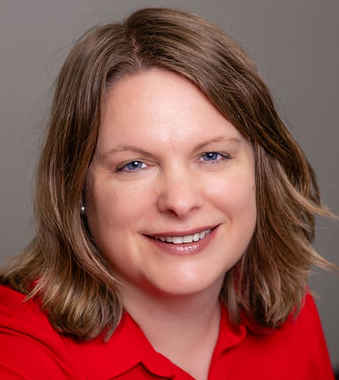
Today I have a special guest on our show to talk about this intersection of OCD and ADHD. The more Christian clients that I work with who are struggling with OCD, the more people I see with unique and complex clinical presentations. Today I’m joined by my guest Nikole Krueger. Nikole is not only a licensed clinical social worker with 15 years of experience, but she has a personal story of OCD that began when she was nine years old.
And was diagnosed with severe sudden onset OCD. She received ERP treatment for several years before her OCD symptoms became subclinical. Now that she is an OCD therapist herself, she specializes in working with neurodiverse clients, those with OCD, autism, A DHD, using ERP as well as ICBT for OCD.
Carrie: All right. Well, welcome to the podcast Nicole. So glad that you’re here with us today.
Nikole: Thank you for having me. I’m excited to be here.
Carrie: Today we’re talking about kind of this overlap and intersection between OCD and A DHD, which is something that know a little bit more about than I do, so I’m excited to learn from you as well.
We’ve had a previous conversation that was just really helpful. I know A DHD gets thrown around a lot. A lot of people probably have a general idea about what it is, but how would you briefly define it for our listeners?
Nikole: A DHD stands for Attention deficit Hyperactivity Disorder. I really hate that name.
It’s a misnomer. People with A DHD don’t have a deficit of attention. They have plenty of attention. They just have difficulty directing it at the correct tasks, at the correct times. A more appropriate label might be attention dysregulation disorder. There’s been different things put out there, but alas, A DHD is what we’re stuck with for now.
The hyperactivity part of the name can also be misleading though, because some people with A DHD do experience that externally observable. Hyperactivity or impulsivity, but other people don’t really look hyperactive to others on the outside, but they may still experience internal hyperactivity. Like for example, their thoughts might kind of be always zooming around like alphabet soup in their head versus like getting from A to C might feel really difficult, right?
Carrie: Having a coherent thought expression, you.
Nikole: Yeah, exactly. And just being able to follow this place, to this place, to this place versus kind of being scattered all over. The example I give is, it’s kind of like if someone who is neurotypical or whose brain has formed and, and functions in a more typical fashion, it’s almost like they have like this little internal administrative assistant that organizes and prioritizes their thoughts in neat stacks and um, hands them to them.
Whereas people with A DHD, their brains look more like my desk when I’ve just cleaned my kitchen and kind of shoved all the stuff there so that at least my counters are cleaned, right? There’s no order. It’s just kind of all there and it’s hard to sort through, like what’s the most important or what should take priority.
Some common phrases I’ll hear from people with a DHD. Include things like people saying time isn’t real, or if I think of something I wanna say, I have to say it immediately, or I might forget it. If I try and hold it in my mind. I get so focused on remembering it that then I can’t follow what happens next.
In the conversation. I hear people say a lot, like, I have no problem getting stuff done the night before it’s due, but it feels impossible to start before then. So a lot of that procrastination or like I know I do better with structure, but it feels like my brain is rebelling against it. Or I set something down and then two seconds later I have absolutely no idea where I put it.
Even just funny things, like example I’ll give people sometimes is if I’m stuck in traffic, I would rather just take a side street to get around it, even if it will take me longer. ’cause at least then my car is moving. Just the sitting still. That’s kind of a more adult example of the hyperactivity piece.
A lot of people will say like, I’ve tried 14 different planners, but none of them work. I lose it or I forget to check it, or I quit writing things down after a week.
Carrie: And then you feel like a failure, right? Because you’re trying to structure or organize in a way that everybody else is telling you. Like, well just get the planner.
Just write it down. I don’t know, like why you can’t get it together or why you can’t remember your appointments, or whatever the conversation is like.
Nikole: Right, exactly. It’s like you can’t depend on your brain to remind you of the things that are important when they’re important. Yet, if there are things that spark your interest, you can get really engrossed in that and do amazing work and get really engaged in it.
The example that I like to give is that people with A DHD have more of an interest-based nervous system rather than an important space nervous system. Neurotypical people are gonna be motivated primarily by importance, rewards, consequences, versus people with A DHD are motivated much more strongly by interest or novelty or a challenge or urgency.
So typical motivation strategies often don’t work for them, and they have to find alternative methods to motivate themselves. And even with that, because of that novelty piece, what works today or this week might not work next week. And I tell people, that’s not a failure. That’s just your A DHD brain doing its thing.
So now we just recycle that strategy we were using and pick a new one. Right? So it’s kind of that learning to stay one step ahead and kind of have grab bag of lots of different strategies we can use to motivate when the things that other people are suggesting aren’t really working. One book I wanted to share, this is my favorite book on A DHD.
It’s called Extra Focus. It’s Jesse Anderson and a lot of the stuff I just talked about he talks about in here. He takes a lot of his work from Dr. William Dotson, who’s a huge leader in the world of A DHD. And then another great place just to learn more about A DHD is attitude mag.com. Attitude is spelled a DD attitude and they have a podcast called A DHD Experts that they have tons of great information on.
So those are a few like good places to learn more, but that’s a little snapshot of what, how I would describe A DHD and some of the challenges that come with it.
Carrie: We’re seeing a trend of more people getting diagnosed later in life in terms of, typically we would see this diagnosed in childhood adolescence, whereas now there are more adults being diagnosed with A DHD.
And so that leads me into like, why do you think that is? And what are we missing maybe in childhood or adolescents that they’re not getting diagnosed then.
Nikole: Yeah, that’s a great question. I think when kids are getting assessed, it’s because their behavior is a problem for the adults around them. When adults get assessed, it’s because their symptoms are now a problem for them personally, and they’re getting in the way of work or family life or other areas.
The largest increase in diagnoses nationally right now is for females ages 31 to 40, so you’re right. A lot of it is females, and we can talk more about that later. When an adult comes in for assessment, some factors that could be at play include things like maybe growing up in a family that has some fear around labels, like A DHD, or some preconceived ideas about stimulant medications.
So in these cases, even if teachers or others in their lives are raising concerns, parents might be unwilling to have their children tested or treated for A DHD. Then the child becomes an adult and now it’s a problem for them and they wanna seek it out. A DHD is also largely inherited, about 70 to 80% heritable.
So there can also be this perception of, from the parent’s perspective, well, I figured it out like you’ll too. Another factor can be that when parents are highly involved in structuring their kids’ time and schoolwork and like staying on top of them to make sure. They get everything in on time. We call that scaffolding.
In those circumstances, kids may do just fine academically until they maybe get to college and those support systems are removed and they’ve never learned the skills for themselves on how to structure their own time and responsibilities. So I always encourage parents to like gradually step back to see like, okay, is my kid picking up on these skills and able to implement them for themselves so that it’s not just like dropping them in the deep end when they go off to college.
Carrie: That’s huge. I think for many different areas of life, a lot of times parents don’t slowly remove the scaffolding in adolescence and allow their children to fail or mess in some way, and they have to. Sometimes. That’s the best way that we learn and we don’t like seeing our children fail. But I know for me, that’s where I’ve learned most of my lessons of how not to do things is by making mistakes and trying to do something different.
Nikole: Absolutely, and little people, little problems, big people, big problems, right? I’d rather my kid make mistakes and mess up when I’m still around to help them clean up the pieces and figure out how to fix it than when they’re on their own. Another factor that can play a role is that when kids are highly intelligent, they sometimes develop strategies to get through school without being flagged as problematic.
So they may not be doing as well as they could be academically, but if they’re not failing, there may not be anyone raising red flags if they’re not also a behavior problem in the classroom. And then I think another big reason is that social media has played a big role in raising awareness about A DHD and autism and other conditions.
A lot of times adult assessment is triggered by this newfound knowledge, and that can be a double edged sword. Social media isn’t always the greatest source of information. Anyone can put anything out there, but it has helped a lot of clients I’ve worked with who legitimately do have a DHD and just weren’t aware of it or didn’t know what to look for.
Begin to investigate it and go down that road of like, huh, that sounds familiar. I wonder if that could be describing me. Ultimately, I tell people A DHD isn’t a problem in and of itself, given the right circumstances. An A DHD brain can be an asset. When we look at the general population, about 5% of adults have a DHD, but about 30% of entrepreneurs have a DH ADHD Careers that require high energy or creativity or problem solving are great for people with A DHD worked with plenty of doctors, lawyers, et cetera.
Who like thrive on that fast paced, go, go, go. They, they’ll even say like, it matches my brain speed. That can really be an asset. They may need somebody else to fill out their expense report or complete their paperwork, but if you let them do what they’re good at, they may be way more productive than a neurotypical counterpart.
The problem is we live more and more in a society that requires us to sit at computers to do our work all day, and that kind of reality is not conducive to an A DH ADHD, interest-based nervous system. So I think that’s where people are more and more feeling impaired because they just like can’t get through a day at a computer.
It’s not interesting enough, it’s not engaging enough. They’re just like dead in the water.
Carrie: Yeah, that makes a lot of sense. How do you feel like this presents differently for men versus women?
Nikole: Another great question. So on average, women and girls tend to experience less of that external hyperactivity and impulsivity than men and boys do.
And women have tended to have more of those inattentive symptoms like difficulty focusing or forgetfulness. They may still struggle with that internal mental hyperactivity, but it’s not necessarily something that others are seeing externally. So because those symptoms are less noticeable teachers or parents.
Are often less likely to make the connection that they might have a DHD, so they’re often not diagnosed until later in life, if at all. Or they might be misdiagnosed with depression, anxiety, bipolar disorder, other things. Interestingly, when someone with A DHD is trying to self-motivate, the way we understand it is that there’s not enough dopamine in the brain to consistently activate our prefrontal cortex, and that’s the largest part of our brain where ex our executive functioning skills operate out of.
When we can’t access that consistently, our brain starts to use the limbic system to accomplish tasks, and that is the emotional centers of the brain. So when something is due two weeks out, for example, and we would normally use. Our prefrontal cortex to plan ahead and motivate ourselves and work a little bit at a time to pace ourselves well.
When that’s offline, we procrastinate. We don’t do what we’re supposed to. We know it’s there. It’s not a matter of knowing it needs to be done. It’s a matter of doing what we know. That’s the problem. Then we get to the night before and now all of a sudden we have anxiety because it’s due tomorrow and there’s gonna be consequences if we don’t get it done.
Now that we have anxiety that triggers the limbic system to turn on and we can get the thing done.
Carrie: Wow.
Nikole: That explains a big piece of why we see a lot of overlap with depression, anxiety, and A DHD. Vast majority of people with A DHD also have some other, yeah. Depression, anxiety or, or something else going on.
And I think a big piece of that is because they’re using the wrong part of their brain for the wrong task. That’s not what your limbic system is meant to do. The other piece of that is that primarily inattentive men are also less likely to be diagnosed in childhood because they’re also not the hyperactive ones that have behavior problems in the classroom.
So they might be less likely to be identified. Then the last thing I would say is that women and girls hormones also play an important role in A DHD symptom presentation. Dopamine is the brain chemical that’s involved with A DHD, but estrogen modulates dopamine. So during the first half of the menstrual cycle when estrogen is high and increasing symptoms might be less noticeable and medication may be more effective.
Then in the second half of the menstrual cycle when estrogen plummets medication may be less effective, symptoms can go up a lot. And so there’s more of this like up and down rollercoaster ride feeling, mood swings, things like that. Premenstrual dysphoric disorder, lots of other things that can kind of co-occur at higher rates in women with A DHD.
Carrie: I wanna go back a little bit to this whole like limbic situation because people are so complex in terms of what we’re talking about with things they have experienced. When I was working a lot with kids and adolescents, everyone would say they can’t focus. Of course, teachers are then saying, well, they must have.
DHD. But then I’m sitting there knowing that their home life is absolutely a chaotic wreck because I’ve been in their house and I know what traumas they’ve been through and these types of things. And not to say that you can’t have PTSD and A DHD, or certainly you can have OCD and A DHD, and that’s what we’re gonna talk about.
I mean it. That’s I think just to give people an idea of why these things sometimes can be really hard to tease out is you’re essentially bringing a cluster of symptoms into the treatment room and somebody is trying to tease out, okay, what belongs to what. Yes. You can’t focus. Sometimes people can’t focus because they’re just so depressed.
I was diagnosed with sleep apnea. I can tell you, you will not be able to focus if you have sleep apnea at all. You will have memory problems. You really have to look at the whole picture. I want people to hear that in terms of, I think it’s helpful if you suspect you have some of these things to go get evaluated by a psychologist or somebody that’s been trained to diagnose and help you kind of tease some of these things out.
I think that’s really important.
Nikole: Absolutely. It just goes to that how important that differential diagnosis piece is because there’s plenty of examples of why someone, you can have the same behavior, but the function of the behavior can be different depending on what’s going on. Trying to tease apart.
Yeah. Where is that coming from? Getting a thorough history, all that kind of stuff is so important. Totally agree.
Carrie: Yeah. Let’s get into the OCD piece. How have you seen where OCD can mask the A DHD symptoms?
Nikole: Yeah, I think there’s a few different ways. We know OCD and perfectionism often go hand in hand, so when somebody has a DHD, their brain might be kind of rebelling against doing a boring or an uninteresting task.
But their OCD part of their brain might be insisting on them doing it anyway and doing it perfectly. It may take them more time or effort to do the task, but they may still get it done. And then I think just having both OCD and A DHD can be incredibly discouraging because on the one hand, your brain is telling you you have to do things just right or according to specific rules.
And then on the other hand, you’re constantly missing small details or you’re losing your train of thought. So there can be a lot of that frustration and shame that can come compound when you don’t have logical answers for why your brain is acting this way. This is again, where that differential diagnosis is really important.
So looking at the function of the behavior, one example I like to give is rereading. Somebody with a DHD will reread the same page because their eyes went over the words, but their brain had wandered off and was thinking about something more interesting. And so they didn’t register what was happening.
They couldn’t tell you what they just read versus someone with dyslexia rereads, because maybe the lines look like they’re moving on the page or the letters or the words are flip-flopping, and so they’re having trouble comprehending what the meaning is and just the mechanics of it. And then someone with OCD Rereads, because what if I missed something important?
And it was vital. So they didn’t, they fully comprehended what they were reading, but they have this anxiety and this obsessional doubt that is fueling that compulsion to reread over and over and over to make sure they didn’t miss something. The behavior of rereading is the same, but the function underlying it is very different.
Carrie: Yeah, that makes a lot of sense. It really does. What if someone potentially comes to see you, and this is an area that you work with and they’ve either been previously diagnosed or they go through the process and you believe they have a DHD and OCD, what does treatment look like or how might that differently for that person?
Nikole: I’m a big believer in evidence-based treatment. I think each diagnosis needs to receive the evidence-based treatment for that specific condition. So for A DHD that generally looks like some combination of A DHD coaching and medication, and I like to do some blood work to rule out other commonly mimics of A DHD.
You mentioned sleep apnea, that’s one. Thyroid disease can be another one. So there’s some different things we’d like to rule out. First medications for A DHD might include stimulants or non stimulants. For OCD treatment would include OCD specific therapy, like ERP or ICBT and possibly medication, usually an SSRI.
When I’m looking at like helping people figure out what to start with or which condition we target first. I always wanna look at the one with the most impairing symptoms first and then proceed from there if they’re able to do concurrent treatment of both rate. But I know finances don’t always allow for that, so we try to prioritize what’s the primary issue and let’s target that first.
And then if co-occurring symptoms are getting in the way, then doing something concurrent treatment might be more beneficial or bringing in pieces of the other treatment. If you can find a clinician that knowledgeable about all things, that’s great, and that kind of can be hard to find sometimes, but that’s the ideal situation.
Carrie: Yeah, and I think part of the spark for this episode too is just noticing when you and I had talked previously about how some of my clients had their OCD became much more manageable, and that was when the A DHD kind of rose up and became unmanageable because the OCD was kind of keeping them more in check.
And so once they stopped those compulsions, then it was like life became unmanageable.
Nikole: Right? Now how do I motivate myself? I don’t have the dopamine doing it now. I don’t have the anxiety doing it. So now what?
Carrie: Yeah, so I mean, I think that that’s just something for people to become more aware of or more in tune with.
If they feel like, oh, okay, now OCD is better, but now I have these other issues with organization and structure and getting things done and. Et cetera. I know I’ve had a couple clients that were diagnosed at post-treatment for OCD and I found that very interesting. Like, oh, hey, this is a thing that this is a pattern that’s happening, and did we miss something Potentially, but it just had not potentially risen to the surface.
And I think kind of what you said, it’s like sometimes people will come in for counseling and they’ll say, I want to do this or that, or even I want to do OCD treatment, but they’re so depressed. Like you’re gonna make no progress. There’s no motivation to even engage in OC d treatment. Like until you take care of the depression first, like, okay, we’ve gotta get you in a, like feeling better enough to engage in that treatment, which is challenging.
And I would imagine you’ve probably seen things like that as well. Okay. There’s something in the way of what you’re saying you’re wanting, and if we don’t address that first, then we’re gonna have problems later on down the road.
Nikole: Absolutely. And I think just a lot of like self-compassion and in compassion for people are doing the best that they can.
And sometimes there’s something else like a DH, ADHD or autism getting in the way of follow through on homework or stuff like that for therapy too. And it’s not always that people are just trying to self-sabotage. Sometimes they legitimately real difficulties with these things or maybe have never been taught them before.
Carrie: And even just in terms of using your phone to remind you of things or using a planner or using visual cues to keep yourself on track. Some people have not learned to do those specific things or structure their day in a certain way. Even energy levels. What, where is your energy the highest during the day and getting maybe some of those non-preferred tasks done.
I don’t know. Are there other kind of things that you’ve seen that you’ve found really helpful for people?
Nikole: I think it’s very individualized. When I assess someone and I give them like a report back, I have like 10 pages of different ideas and recommendations. But a lot of them have just like come from people’s own experience of like, I really like this app, and then this person’s like, I hated that app, but this one worked for me.
So it’s really just finding what motivates you individually. Then trying to incorporate that into the tasks that are harder for you. For me, I know I can be very competitive person, particularly if I’m like playing games or something. Something that might be motivating for me would be setting up non-preferred task as a game where I’m like playing against myself or racing the clock, or I’m gonna do like 20 minutes and see how much I can get done in that time, versus just trying to sit down and write a full report.
But for other people that might not work. Again, I think learning more about it, understanding how the brain works. One of the reasons I love this book so much is because he has a few chapters at the beginning about understanding A DHD, but then the whole rest of it is just strategies, and they’re only like a page or two.
There’s pictures. It’s spaced nicely,
Carrie: easy to digest.
Nikole: I read, this is a skinny book. I have a hard time getting through a whole book as someone who does have a ADHD and OCD. And this was an easy rate for me and it’s something you can like pick up and be like, oh, here’s another strategy. Lemme try that one.
So I think it just comes back to like being flexible, not expecting your brain to always want to do the same thing the same way every time, which is really what we’re trying to teach with OCD treatment too, right? That we can do things differently. It doesn’t have to be this regimented pattern every time.
Carrie: Yeah, our brain goes towards what’s familiar, which is not always what’s best for it. Learning to take different pathways in your brain and understanding that now that we know more about the brain and we understand neuroplasticity is a possibility and that we can create new neural pathways, it’s really exciting to, and how that applies to this material as well.
It takes some practice. It’s not a quick fix thing, but you can retrain your brain to respond differently to different situations. So if someone thinks that they may have a DHD, what does that assessment process look like for them?
Nikole: A lot depends on what resources are available in the area where they live.
There’s not just one type of specialist who can diagnose A DHD, A primary care physician can diagnose, but generally, at least in my area, they don’t because. They don’t have the capacity to spend multiple hours with one patient, so they usually refer people to psychologists or other mental health professionals for assessment.
Unfortunately, because A DHD is a neurodevelopmental condition and not a mental illness, there’s often very little training in medical school or mental health programs on conditions like A DHD or autism. Finding a knowledgeable professional on ADHD is not so much dependent on the letters behind their name as it is on like professional development they’ve engaged in and how frequently they work with people with A DHD.
I think the more important thing for someone looking to be assessed is asking good questions ahead of time about what is included in the evaluation. Good evaluation should include a detailed patient interview of at least 90 minutes. Ideally using a semi-structured diagnostic interview tool like the Diva five or a Connor’s, that should include going over health history, mental health history, family history, timeline of symptoms when they onset contexts where symptoms emerge.
Examples of impairments. A DHD has nothing to do with intelligence. So if a provider tells you you’re too smart or successful to have ADHD, find a different provider, that as well my biggest piece because it, you can have a super high IQ and have a DHD. They’re different things, but you still have to have impairment in two different settings that may just look different.
So it should also assess for differential or comorbid diagnoses, things like autism, learning disabilities, O-C-D-P-T-S-D, bipolar disorder, major depression, generalized anxiety. Those are the ones I see most commonly. And then at the end of the day, we’re looking for like what is the most likely explanation for this particular set of symptoms given this particular context.
The idea is like we’re looking for horses, not zebras. Like we don’t need the most fancy shiny diagnosis out there. Sometimes A DHD is seen as like a trendy diagnosis. No. We’re looking for which set of symptoms best matches these particular conditions given this particular context. The other things that we want to see in an A DHD assessment include informant rating skills, looking at what symptoms the person presents and impairment from loved ones, or people who know them well.
So often like a spouse, a roommate, a close friend, parent. Then we want self rating scales for adult symptoms as well. I like to do a continuous performance of test that also measures activity. The one I use is the QB test. Really like it. A lot of people will be able to focus as long as they can move their body, but that movement is really important.
So if you don’t measure activity, it’ll look like they pass the test, but they’re only passing the test ’cause they’re moving around and fidgeting the whole time. So that’s interesting. And then when possible, I also like to have. Self and informant rating, scale of childhood symptoms or like reviewing report cards from when they were little things like that.
For your listeners, I would say like start with asking your doctor if they have a referral list of the local providers who assess for A DHD, but then do your own research. You can look up provider ratings online. Just keep in mind that a good clinician isn’t gonna diagnose everybody, so there’s gonna likely be some responses of people who complain if they don’t like the diagnosis they get.
Everything with a grain of salt. But the other thing is, if it’s a child, someone who’s still in school and they’re struggling academically, they could ask the school to formally request in writing that the school assesses them for A DHD and learning disabilities Also, unfortunately, be prepared to pay out of pocket.
A lot of times insurance doesn’t cover a DHD assessment very well, and because we really need to look at that thorough history and get a lot of different pieces, there’s a lot involved in it.
Carrie: Yeah. It can be a pretty extensive process. Okay. Well, thank you so much for sharing that information. I think this has been really helpful and beneficial for our listeners.
Nikole: Yeah, you’re very welcome. Thanks for having me on.
If any of you would like to connect with Nicole, as always, we put our guest information in the show notes. If you aren’t receiving our email newsletter, I encourage you to go to kerry bach.com to sign up for our email list.
My newsletter goes out every Wednesday and it’s just a personal story. Maybe something that happened that week. Something that God is showing me in my own life or something that I just some support and encouragement I really felt like he wanted me to share with you. When I did the listener survey, one of you had commented that you appreciated the emails and.
I just wanna say thank you so much for saying that it really touched my heart because I do put effort into them every week to write something that I think will benefit those that are gonna receive it. Just a little piece of my heart to you guys, so if you’re not on there, I just don’t want you to miss out on all of the good stuff.
As always, thank you so much for taking the time to tune in today.