Tag: Anxiety Relief

120. Are You Overly Responsible for Others’ Choices? 3 Ways to Know. with Carrie Bock, LPC-MHSP

In this episode, Carrie explores feeling overly responsible for others’ feelings and actions. She explains how this can cause stress and shares some helpful ways to ease that burden for greater peace and acceptance.

Episode Highlights:

  • The signs of being overly responsible for others’ behavior and emotions.
  • How trying to control others can lead to internal stress and anxiety.
  • Why taking responsibility for others’ emotional experiences can be detrimental to your well-being.
  • Strategies for developing distress tolerance and finding peace amidst challenging relationships.

Episode Summary:

Welcome to episode 120 of Christian Faith and OCD! I’m Carrie Bock, a licensed professional counselor based in Tennessee. If you’re outside Tennessee and need help connecting with anxiety or OCD resources in your area, I’m here to assist.

Today, we’re exploring the anxiety that comes from feeling overly responsible for other people’s emotions and behaviors. You might be overstepping if you’re trying to control or prevent someone’s actions, especially in relationships marked by codependency or addiction. Remember, the ultimate responsibility for their behavior lies with them.

Another sign is taking on others’ emotional experiences. If you avoid speaking your truth or setting boundaries out of fear of upsetting someone, you’re likely taking on too much. It’s important to communicate with kindness while allowing others to handle their own reactions.

Lastly, if you constantly try to change someone’s behavior or convince them to do something differently, it’s a sign of excessive responsibility. Accepting what you cannot control and focusing on your own well-being can help alleviate this stress. For support, check out my mindfulness course to develop distress tolerance.

Feel free to share your thoughts through our contact form at carriebock.com. Thank you for joining me, and may you find comfort in God’s great love for you.

Explore related episode:

Welcome to Hope for Anxiety and OCD episode 120. I am your host, Carrie Bock, a licensed professional counselor in Tennessee. I also provide consultations to those outside of the state of Tennessee who are looking for finding and getting connected with specific resources for anxiety or OCD in their area, or what might be the next step that would be helpful for them.

Today on the show, we’re talking about being responsible or feeling this sense of responsibility for other people’s feelings and behaviors. Even though you’re not responsible for others in that way, that may be new news to you. It creates a lot of anxiety when we strive to try to control other people or try to manage their behavior that can cause us a lot of internal stress. I want you to have peace, enjoy, and be relieved for some of that. 

We’re going to talk about three ways that you know that you’re overly responsible for someone else. 

Number one, you find yourself trying to prevent certain behaviors in that other person. This happens a lot in terms of codependency with people who have addiction.

Let’s say, for example, you’re trying to reduce the addict’s stress so that they won’t use. You go around, you clean up the house. Maybe even do things like throw away the alcohol, put out the pamphlets or the information on the local AA meetings. There are all these little things that you’re doing to try to influence or control that person’s behavior, trying to make sure that there isn’t conflict so that they don’t get upset.

This also happens frequently if you’re connected with someone that’s angry, and you may know certain things that trigger that anger, certain things that are a tipping point, and so you hold back. On saying things that may need to be said, you hold back on setting boundaries because you don’t want to upset that other person and you don’t want to have that anger unleashed on you.

Here’s the problem: People are unpredictable human beings. So, even though we may tiptoe around the attic in hopes that they won’t use or try to create the perfect scenario for their sobriety, ultimately, like, they have to be the ones to take that responsibility on to be able to surrender to God, surrender to, I’m powerless over this addiction.

They have to take that responsibility in order to move forward. You can’t make them or take that responsibility on for them. People who have difficulty with anger or fly off the handle, as you know, you can tiptoe around them, but there’s still going to be something that sets them off. It’s unexpected, something that’s completely outside of your control, like people who are just stressed about work, they’re mad, and they come home and unleash on other people.

You cannot prevent that. That person has to recognize their own issues, the other things that are leading to their anger. They are responsible for managing their stress. You’re not responsible for managing their stress. We take that step back and say, “I cannot change this other person.” That is a hard acknowledgement.

It’s an important acknowledgment for you to have. It may bring up a lot of sadness that you’re avoiding dealing with. It may bring up other emotions that are hard to sit with, feelings of powerlessness, inadequacy, and it’s much easier to get into doing mode, tiptoeing around, and trying to prevent those people from falling into behavior patterns. We cannot change other people. Only God can do that. 

Number two, similar to number one, you may be overly responsible for others if you take responsibility for others emotional experiences. What this looks like? We are called in scripture to have the fruit of the Spirit. When we are connected with God, we experience love, joy, peace, and patience. We are told to speak the truth in love. We also have to balance this with times where God calls people to be bold and to be brave, to prophesy at times and say hard truths. All that means is speaking the truth of the gospel or of Scripture. We’re called to do that in love. But a lot of times what happens is we tell ourselves, I can’t say what I need to say to this other person, or I cannot speak the truth to them because they’re going to be upset or they’re going to be angry at me and this can even happen in our closest, most intimate relationships with our spouse. Sometimes we need our spouse to call us out. And it’s a beautiful thing because that lets us know, hey, you have a blind spot here. 

My husband called me out not too long ago and said, “You have unforgiveness towards these people in your life.” I was like, “Oh! Ouch!” It did. It hurt my feelings, but I’m so thankful that he said that because that was a blind spot for me. I wasn’t in awareness that I was still holding on to so much anger and bitterness that in my perception I thought I had let go of, but what he was able to see from the outside view was “No, you haven’t let go of that.”

By allowing me to have that hard emotional experience, it drove me back to God. It drove me to prayer to say, “Okay, God, am I in unforgiveness?” Yes, I do believe, that I’ve been convicted and I’m in unforgiveness and allow me to pray through that and say, I don’t want to hold on to this anger towards these individuals any longer.

I don’t want to live in bitterness. Yes, I believe what they did was wrong, and I’ve had my time to be angry about it, and now it’s time to not continue to hold it against them and to let it go so that I can be at peace. These are also people that I want to continue in relationship with, and I want to continue walking side by side.

As a result of that, I need to have a positive, forgiving, and loving, gracious attitude towards these individuals. That was incredibly eye-opening and incredibly loving. But oftentimes what happens, even in Christian circles, is we say, “Oh, I can’t set a boundary because that’s going to hurt that person’s feelings,” or “I can’t speak the truth and let them know that they’re off course because they’re going to get mad at me and they might not want to be my friend anymore.” This is unhealthy in our lives when we take responsibility for other people’s feelings and try to prevent them from having hard feelings, because sometimes we need to have hard feelings. That’s a part of growth. 

If you say something, and even if it’s a kind word, and you know that person is going to be upset, they have to deal with their own feelings. You are only responsible for saying the kind words, for speaking the truth in love, for showing patience with other people and grace. We also don’t just run around calling people out just because we want to have a positive relationship with that person and be careful with our words. But there are times where you’re going to say kind things and people are going to get mad at you. There are going to be times where you say, Hey, I’d encourage you to look at this in your life or to look at that situation and they’re not going to receive that. You have to know that you have done your part of what you’re supposed to do. 

Number three, you may be overly responsible for other people if you believe that you can control or convince that person to change their behavior in some way. If only I say this, then maybe they’ll change.

If only I say that, then maybe they’ll get it finally. If I only tell them for the 50th time that they need to go to therapy, It’s the nagging wife syndrome, right, where you just continue to bring something up, continue to bring something up, continue to bring it up. What happens in these situations, you just get more and more frustrated, more angry. It’s like hitting a brick wall. What happens with the other person is they become more defensive often. “Okay, you’re telling me I need to change and so I’m going to dig in my heels and tell you that everything’s fine and we’re good.: The more that you push people with that type of energy of, “I need you to change so that I can be okay inside.” That’s the energy sometimes that we can bring to these relationships that we don’t even realize we’re bringing that energy. 

So whenever you are trying to change someone and they push back, that’s why, because it doesn’t feel good. And automatically, the knee-jerk reaction is to go into a defensive mode. We need to learn to be okay, even when other people in our life are not okay because you’re going to have them. You’re going to have those people. It doesn’t matter if it’s a family member. It doesn’t matter if it’s a co-worker that you really wish that they would change. It doesn’t matter if it’s a boss. There are going to be people in your life, regardless of what you do and what circles you’re in that you have a hard time relating to people that are just maybe difficult to deal with. 

I heard someone say they’re extra grace required people. I don’t remember who said that, so I apologize. Whenever you have an extra grace-required person in your life, that’s an opportunity for you to connect with the Lord to say, “Okay, God, I want to love this person well.”

What does loving them well look like? Sometimes loving them well means accepting their mess right now. It means saying, “Look, “I see you and I love you and I accept you right where you’re at. I don’t need you to change. I’d love it if you would change because it would help you be a better person. It would help you grow closer to the Lord, but as far as me, I can be okay, even if you’re not okay.” 

Sometimes it means setting healthy boundaries to say, in order for me to remain mentally healthy and love you the absolute best that I can, I’m going to need you to know that this is what I can give to the relationship and then I’m going to have to take a step back in some other areas. I’m going to have to kind of let you fall at times. I’m going to have to. let you make choices and make mistakes. That is really, really hard sometimes for us to do. It’s hard for us to sit with these difficult emotions and knowing that someone is making very poor choices over their life, but if you have already spoken those truths to them and encouraged them towards the right path, then you have done your part.

You have done what you can and it’s time to take a step back and trust God with the rest. As you can see, kind of through this process, there are some reasons that we take responsibility for other people’s stuff. It’s because we have a hard time sitting with the emotions that come up. When they make choices that are either unhealthy or that we disagree with, let me tell you what really helps with dealing with those difficult emotions. It’s developing what we call distress tolerance, which is a big way of handling the hard things that come our way. 

A great way that you can do that is mindfulness. I have a course on mindfulness that’ll walk you through the process. What does it look like to be in the present moment, to be aware of what’s going on and in acceptance?

A lot of what we’re talking about today is accepting other people’s choices that may not be great. That’s a hard thing to do. We don’t want to do that. We don’t want to accept that someone’s inactive addiction right now. We want them to be free and whole, and we don’t want to accept that we have a person in our life that might fly off the handle unexpectedly.

We don’t want to accept that. We want that to change because that would help us feel better internally and not have to sit on the edge of ourseatst with all that energy of what’s going to happen with this person. But once we accept our situation, it leads to a sense of greater peace. We know what our role is.

We know what God’s role is. We know what that other person’s role is. And we’re able to tease some of those things out and a little bit cleaner way. I’d love to hear your thoughts on this episode. You can reach us any time via our contact form, hopeforanxietyandocd.com. 

Thank you so much. Christian Faith and OCD is a production of By The Well Counseling.Our show is hosted by me, Carrie Bock, a licensed therapist.

Until next time, may you be comforted by God’s great love for you.

109. What Christmas Teaches us about Managing Anxiety and OCD with Carrie Bock, LPC-MHSP

In our Christmas special, Carrie talks about the Christmas story and how it can help with anxiety and OCD. By connecting Jesus’ experiences with our own struggles, Carrie offers insights and understanding for a more hopeful holiday season. 

Episode Highlights:

  • Timeless lessons from Christmas to help you deal with anxiety and OCD.
  • How you can relate Jesus’ challenging times to your own struggles, especially those related to anxiety.
  • The role of Jesus as a counselor and the guidance of the Holy Spirit, especially during uncertain times.
  • The value of connection over absolute certainty in managing anxiety and OCD.
  • Tips on managing anxiety during the holidays (excerpt from Episode 55)

Episode Summary:

Hello and welcome to Episode 109 of Christian Faith and OCD! Today, we’re diving into a unique perspective: what can Christmas teach us about managing anxiety and OCD?

One of my favorite modern Christmas songs by Chris Risen says, “This is such a strange way to save the world,” and it truly was. Jesus, who could have saved us from afar, chose to enter our world—full of hurt, pain, and anxiety—to be with us, as Emmanuel, “God with us.”

Jesus, fully God and fully man, experienced everything from hunger to betrayal and even intense anxiety, like when He sweat drops of blood before the cross. This tells us that God understands our struggles intimately. When we feel isolated by our OCD or anxiety, we can remember that Jesus chose to live in this world and experience its difficulties, so He truly gets what we’re going through.

Jesus also showed us the ultimate example of humility. He could have come as a mighty king but chose to be born in a manger, living among common people. In a world that’s so focused on appearances and perfection, Jesus’s humility reminds us that it’s okay to be open about our struggles, whether it’s anxiety, OCD, or anything else. We don’t need to hide our flaws but instead can share our testimonies even in the midst of our trials, trusting that God is working through it all.

That’s what Christmas teaches us about anxiety and OCD: Jesus came to be with us, to model humility, and to guide us as our eternal counselor. Merry Christmas, and I look forward to journeying with you in the new year!

Check out related episode:

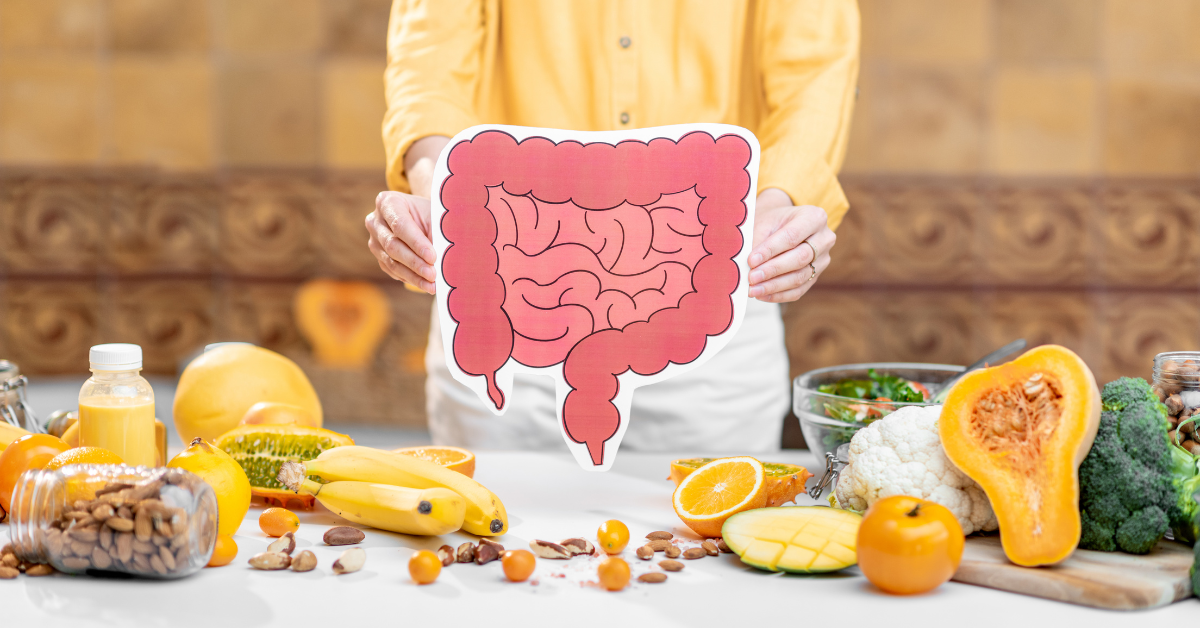
44. How Can Improving Gut Health Help Your Mood? with Maggie Roney, MS, NCC, LPC

Today, we are privileged to have Maggie  Roney on the showMaggie is a Licensed Counselor and Functional Medicine Practitioner.  She helps those who wish to get to the true root cause of their illnesses. Maggie shares with us her knowledge on functional medicine and how we can improve our gut health. 

Episode Highlights:

  • How does functional medicine work? What are its benefits? 
  • Is functional medicine better than conventional medicine?
  • Types of toxins we put in our body that we are not aware of.
  • The link between anxiety, stress and gut health
  • Small steps to take to achieve better gut health

Episode Summary:

Many people with anxiety also face digestive problems, yet doctors often can’t find a clear cause. These issues may actually be linked to stress and anxiety.

In today’s episode, we dive into the connection between anxiety and gut health with Maggie Roney, a licensed professional counselor and certified functional medicine provider. Maggie shares her personal journey from counseling trauma survivors to discovering the impact of functional medicine on mental health and physical health.

Maggie noticed that many of her clients still had persistent digestive issues, even after addressing their emotional stress. After her own struggles with medications and undiagnosed health issues, Maggie became passionate about combining trauma-informed counseling with functional medicine to help people heal.

Anxiety can show up in the body as muscle tension, digestive problems, autoimmune conditions, and more. Maggie emphasizes the importance of treating both emotional and physical health together for better overall wellness.

If you’re dealing with anxiety, digestive issues, or unresolved trauma, this episode is for you. Maggie discusses how functional medicine can support your healing journey alongside trauma-informed counseling.

Tune in to learn how a holistic approach can improve both your mental and physical well-being. Healing is possible when you address both mind and body.

Resources and Links

Maggie Roney,  MS, NCC, LPC

Welcome to Christian Faith and OCD. One thing that we often see with anxiety is that individuals who struggle, who commonly have issues with their digestive system. They may have gone to doctor after doctor or gastroenterologist has tests run only to find out that they can’t necessarily find anything specific and it may be tied back to stress and anxiety.

Today on the show I have with me, Maggie Roney, who’s a licensed professional counselor and certified functional medicine provider. So we’re going to be talking about the connection between anxiety and gut health, too. 

Carrie: Maggie, how did you become interested in additional training? So you started out as a licensed professional counselor and then chose to become certified in functional medicine. How did you get to that?

Maggie:  I specialize also with trauma and EMDR consultants. I would see many clients that even as we, for the trauma, we worked on lifestyle choices and even lowering the stress they would still be on medications after medications. But the medications and our wants to make a, just a side thing hereof. I am not against medication. It has its place and it’s time to use it but I don’t have to go through so many and they’re not working. Then I thought there has to be a different way.

There has to be something that can be added or something that can be done. People would want to come off of their medications due to side effects that they did not particularly care for. It worked at first, but now it’s not working. So that was one reason. Another is my own health journey. I was 35 and they said, you’re completely healthy. But yet I’m on five medications that do not make any sense to me. None of them were things like pencil lines and as I learned more and I went on my own health journey, I thought I can really integrate these two and help someone out and that’s whenever I sought out and printed, the certification.

Carrie: Okay. I know a lot of people who have experienced trauma. We talked about how trauma is stored in the body. This is just one way it can manifest in terms of digestive issues, but it can also manifest in terms of muscle tension, sexual dysfunction issues and a whole host of other things. A lot of times people don’t necessarily connect that back to the traumatic experience.

You and I had talked off-air about auto-immune issues that people have. Oftentimes that’s very common with trauma, like fibromyalgia.

Maggie: Yes and it’s not even okay. It’s a traumatic event that caused that. Lifestyle choices and stressors that keep on working through and someone may get a virus and that’s what kicks the body into an auto-immune condition.

Carrie: Gotcha. It’s interesting to me how much overlap there is in our emotional health, mental health and our physical health. Unfortunately, a lot of times, those seeking help are very polarized. Perhaps the counselor may not be talking with the primary care physician and vice versa to really figure out and get to the bottom of what’s going on.

Have you seen that with your practice as well? That those areas tend to be silenced and people aren’t communicating as much. 

Maggie: I have. I do believe that more often than not counselors do try to reach out. It’s kind of split under the rug — “Okay, good. You’re taking care of your mental health. That’s fine. But you leave everything to me.” Sometimes you have to find positions that are receptive to different ideas. Even as a therapist, you can say, “I have this insight, can you help me understand this part of it?” That can be difficult, but I do see where there is just not enough communication.

Carrie: I think it can be hard for clients too if they’re honest with their medical practitioner to say, “I have anxiety.” They’re afraid a lot of times that their symptoms will be dismissed. That’s automatically your anxiety versus fully looking into the different aspects of it. Right? How can functional medicine benefit people in a different way than traditional Western models of medicine?

Maggie: Unfortunately with Western medicine and many advancements that we have made, it is not a one size fits all. If you have anxiety, here’s your protocol. Here’s what you do. Here’s your perspective. We see you in a month to three months with functional medicine.

We look at you as an individual. What is it that you are needing or could be doing differently? You could have the most summary of chronic stress, the cause may not be considered something big like divorce or death or something of that nature. It could be a high stress job. It could be insomnia and then we look out for the underlying reasons. Do you have a mammal or a vitamin deficiency? Do you have a genetic capability or a genetic condition that causes it? Or you may need a little bit more supplementation in one area versus another. Is it that you have food sensitivities exacerbating symptoms that you are experiencing? It is really getting down to the root causes for that individual which unfortunately is a lot of just toxins practice. 

Carrie: If you’re able to eliminate those things, then you’re able to feel a lot better physically is what you’re saying. 

Maggie: Yes. 

Carrie: Talk with us about toxins, like what kind of toxins do you see that the people are dealing with or consuming? Maybe it’s something that we aren’t fully aware of.

Maggie: No, of course the die die, obviously for ADHD, The anxiety process is a lot of this. We have things that we can’t even connect and those have difficulties with the body to break down and utilize some nutrients and it can create and test on permeability, which we can get into just a little bit. Other toxins can be our personal care products. For some reason here in the United States, they allow so many more ingredients that are banned in Europe and they have severe fines and can shut down your business. The Roundup weed killer, it is FDA approved, even though yet the FDA says, okay, it causes difficulties, but the FDA approves it to be utilized for weed killer. We then ingest that and that has a tremendous effect on our bodies.

Another thing as great as technology is, we all love it especially over this last year. It’s safe but all of the Bluetooth and the WIFI and all of that, has EMS electromagnetic fields that can be very damaging to our health. It causes ourselves to oxidize or cross the free radicals which are very damaging to us and our bodies can’t keep up and work on getting those out. It can be heavy metal toxicity. Not just lad, but mercury and that billings that you had 20 and 30 years ago that can still be in the body needing to detox. If our body doesn’t do a job detoxing, what it does is it stores it in the body but then that doesn’t function that makes us healthier. 

Carrie: Why is gut health so important to our mental health? 

Maggie: It used to be known that serotonin and dopamine are just made in the brain. However, scientists have discovered that in our gut, we actually have a third nervous system called the Enteric Nervous System. When we eat food, when the digestive process begins, and even whenever you smell the food, it releases enzymes to tell the stomach to get ready. It tells the stomach to make acid to break down the proteins that are coming and get everything that needs to go to the small intestine, the large intestine, and we will utilize what is needed in our gut.

We make 95% of our serotonin then it comes up with a nerve called the Vagus Nerve that goes from 60 to 70% of a person’s dopamine which is for motivation. If our gut is trashed, but if you are in your thirties to forties, we came from the age of using antibiotics for sore throat, stuffy nose, and headache.

Our guts are trashed because we have bacteria that live in our gut that help break down the food, help take the nutrients, utilize those nutrients and get them to where they need to go to be used. Those nutrients are needed to make the serotonin and to make the dopamine. That’s pretty much why the gut is so important. 

Carrie: That’s so interesting to me because I don’t hear psychiatrists talking about this with their patients when they’re prescribing medication for SSRI or others for depression. They’re not saying, “Hey, what is it that you’re actually eating from a holistic view? Are you eating a lot of processed food? Or eating a lot of fast food?”  And we get into this negative cycle where we don’t feel good. Then we don’t really feel like doing the good things for ourselves to take care of ourselves and then we’re putting that stuff in our body. And then we’re back to not feeling good again because of what we ate or how we treated ourselves.

It’s a hard cycle I think sometimes for people to get out of. I mean, would you agree with what you’ve seen?

Maggie: Absolutely. You talked about psychiatrists not talking with their patients and some of them just don’t know, and it’s not because they’re not good psychiatrists. But in medical schools, they take one semester on nutrition. They take two years on pharmacology and again, are highly respected, but unless they go out and they seek further education on that, then they won’t know and I’m sure they don’t have time, the way it is. But I wish that they would, and I wish that as needed as antidepressants are or anti-anxiety or anxiety medication, something that we certainly never learned in school or I did — the longer you take the SSRI, your body just stops making serotonin because it figures why we don’t need it.

It kind of stops and then, when people decide, “Hey, I’m going to get off my medication”, their body isn’t used to making serotonin and that takes a little while.

Carrie: Sure but they can. It can rejuvenate and relearn to do that. 

Maggie: Yes. 

Carrie: Okay. Good. That’s really interesting because those medications are often prescribed for OCD as well and in certain higher doses. I think that this topic is very important. What kind of toll does stress have? Cause you talked about stress a little bit earlier and anxiety takes on the body specifically related to gut health. How does that stress affect our gut? 

Maggie: Whenever something major happens, your adrenal system goes into overdrive.

That’s when your sympathetic nervous system says, it’s fight or flight. We’ve got to go, go, go, go, go, go and do, do, do, do do. Unfortunately, the brain can’t tell us or it doesn’t decide. They’re just doing normal everyday life. They’re just really busy and they don’t sleep long. So no, it just goes simply off of the nerves that are kind of firing in the brain, we need to enact this.

So that can be one thing, just a very high-stress life and you ask people today, “Are you stressed?” No. “Okay. Well, how much do you work?” 70 hours a week. That’s anywhere from 50 to 70. I’m finding it to be a pretty normal number. Then I have kids’ activities and can’t sleep, and then I’m taking care of my mom.

So all of those are stressful factors. Even though for us, we have kind of gotten it ingrained in our brains. We go more, we do more, we get more done and we’re better. We’re more successful, although we’re feeling awful. So it can be something very simmering as a toxic situation at work, a very unhealthy marriage just kind of day in, day out and large event rate for death or trauma of abuse. 

Carrie: We’re definitely living in a day and age where more and more people are experiencing chronic stress and I think you’re right. They’ve just kind of normalized it like, well, isn’t this what everybody does, you climb the corporate ladder and you have a family and you have a social life.

I mean, I don’t have time to exercise three times a week or prepare meals. And it’s in a lot of our priorities in what we’re choosing to spend our time on. 

Maggie: Right. 

Carrie: So is that something that you do as part of the functional medicine approach is help people figure out how to make the dietary changes and the lifestyle changes that they need in order to feel better and take better care of themselves.

Maggie: Yes and it’s not just, I see this on your paper so you need to do this, this and this. We talk about what is the motivating factor for them to keep this behavior in and then also explain down to the science of this is what it’s truly doing to your body and this is how it’s affecting your nervous system. If you are in constant sympathetic nervous system mode, you’re not digesting your food, you’re not replenishing, you’re not sleeping and truly sleeping to where your body restores itself. You’re not getting to the place where your body can utilize the food you even eat. It won’t even recognize it. Therefore, you’re not making serotonin, you’re not making Gabba. You’re not making dopamine.

Carrie: Being in that fight or flight state really arrests the digestive system because that has to come from the other part of our nervous system, kind of like being more relaxed. 

Maggie: Yes.

Carrie: Yeah. I think so many people don’t know that or they don’t realize that what are some small steps you would say that people can take to achieve better gut health?

Maggie: I would think the first thing is to really look at your schedule and kind of prioritize what is important for you and what do you want to accomplish. Whether it’s in the day or the week and beginning to really have the activities that are self-care, whether it’s exercise, spending time with others and being social.

It is very important to have those deep relationships with others. Another thing would be to look at what you are eating. This doesn’t mean you have to eat salads all the time and never enjoy anything. Trust me. I love some pizza and if you put peanut M and M’s in front of me, it’s going to be really hard and starting to fail, even though I know I’m going to feel awful the next day.

And sorry that I love a good margarita at the same time. I may have to watch when I eat those things, but watch for the amount of sugar that you are eating. Sugar is terrible for our bodies. It causes such an inflammatory response, even though it may not when you are in your teens and twenties, but it will add up and kind of begin to look at different areas that you would like to detoxify.

Whether that’s in cleaning, there are chemicals in there that are neurotoxic. There are chemicals in there that affect our Endocrine System, which makes our hormones. There are things that affect our adrenals which then affect everything in our body. So really look at all of your products that you have. 

Another thing would be, when your doctor says your laboratory work looks great and you are in good health. Actually ask some questions and look at it. Well, it’s within range, but is that the best range for me? Those are some basic areas.

Carrie: Do you have people that come to you that their labs look great? But they kind of don’t feel good or they don’t feel like themselves, or they feel like they could be at a better place of health.

Maggie: Yes, everything is completely within range. The standard range of here’s what the lowest person is normal. Here’s the highest person that is normal. They’re all within range, but it’s not at its optimal for that person. Looking at the relationships with these different results, we can tell that you have benefited from digestive enzymes for whenever the stomach breaks down proteins or it kind of indicates you’re low and the basics for being nine. Those types of things, which are B6 is probably one of the most prevalent BS that is needed to create neurotransmitters and to create energy in the cell site.

Carrie: Okay. Awesome. It sounds like there’s a lot of different options that people have, whether that’s diet changes, supplement reducing stress in order to get to a better place. And trusting that inner intuition of your own body when you feel most optimal. When you don’t start really paying attention to those cues like, when I eat these certain things, I notice I feel this way the next day. Or if I eat those things, I have more energy or I feel a little bit better. It can make a huge difference by making small changes, just in tune with where we’re at with our own bodies. 

Maggie: Right and that is difficult because I think that we are taught or at least it seems that way to just ignore your own body and just keep going. Well, they said everything was normal, so I don’t know, maybe I’m making this stuff in my head. Then excuse that it is normal and don’t even pay attention to it until then we have other things. I’ve talked to several clients and they will say I was fine until this year and then all of a sudden I have type two diabetes and hyperthyroid and it didn’t happen all of a sudden. We kind of delve into what happened, the root cause and work on reversing those issues. 

Carrie: This has been, I think, very informative. So towards the end of every podcast, I like to ask our guests to share a story of hope, which is a time in which you received hope from God or another person.

Maggie: The first thing that came to my mind would kind of in a way, be my testimony. I believed as a child and then through my twenties, just some things happened and I thought, nope, nope, no, God, no, God. Well with my son, when he was in the third grade, he became suicidal and he was just kind of out of nowhere and it didn’t seem right.

Something wasn’t adding up and I got him to a different place and different school. We ended up switching schools, he wasn’t bullied or anything. We couldn’t figure it out and then we decided on medication. Things got a little bit better, the following year he became suicidal again, and then a break in the next year, the third year, and then suicidal again.

Well, we eventually found out and I know this is extremely controversial, but this is my story and my experience. We found out it was a vaccine injury. Every time he received this vaccine, it was 11 to 13 days later, he would become suicidal. It didn’t click until that third time I thought something was different. He had been on medication for years and years. 

Through that experience, whenever your child is suicidal, I just said, “Okay. I don’t know what is up there but just help.” I didn’t bargain or anything. When the first time I saw him happy and running into school and the sunlight was shining down on him, I took a picture of it and I sent it to his teacher and I said, “This is hope for me” and this secures my faith.

It was the most peaceful feeling I had knowing things were going to be okay now. Yes. We still had a rough few years and we had to detoxify him of the heavy metals. Now he is off all of his medications and doing great.

Carrie: Does he still struggle with anxiety? Certain things happen, changes and all of that? 

Maggie: Yes, but that’s why he has tools that he’s learned from other counselors. But that honestly was the greatest moment of hope I’ve ever had in my life. 

Carrie: That’s good. I think it was very perceptive for you to be able to put those things, those dots together, and be able to advocate for him to get what he needed at that time. Trying to look at it from a holistic point of view, I think that’s really important. 

Well, thank you so much, Maggie for coming on and talking with us about functional medicine and gut health. I think it’s been very interesting and informative and hopefully it will help some people kind of think through their life and how they can make further positive lifestyle changes.

Maggie: Thank you so much for having me.